





Struggling with sexism in Latin America
18.08.2015 23:59


I have one particularly large wrinkle between my eyebrows I put down to scowling while living in Mexico in my 20s, trying to ward off the hisses and catcalls in the street.
There was one day, though, when I dropped the scowl and chose another tactic.
A scorching summer afternoon, I had popped into a corner shop to buy some water.
As I waited to cross the road, two men in a van started to shout out remarks about my body.
I tried to ignore it, but then something inside me snapped.
I removed the lid of my water bottle and squeezed the entire ice-cold contents in their faces.
The comments certainly stopped, and I felt a whole lot better.
A few years later, I moved to the Middle East. At first, it felt like the polar opposite of Latin America.
A region where men and women do not always interact and where the cliched image of a woman veiled from head-to-toe in black could not be further removed from the equally cliched image of women in bikinis during the Rio Carnival.
But look beyond the obvious, and the two regions have much in common when it comes to the role of women.
Protecting women's honour is a fundamental part of Middle Eastern culture, and it is often used as an excuse for preventing women from having equal rights as men.
You need a man to drive you places in Saudi Arabia, and you need the permission of a male guardian to travel.
One by one, rules limit the way women can live freely.
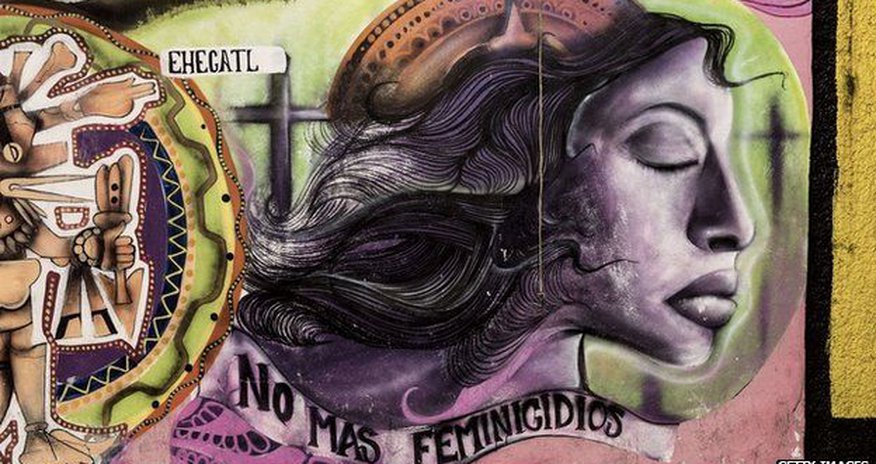
I often thought about how this compared with the machista culture so prevalent in Latin America - a concept that emphasises manliness.
My Portuguese teacher once tried to explain the difference between sexism and machismo. "Sexism is bad," he said, "but machismo isn't - it's a way of protecting women." I am still struggling to find the positive differences to be honest.
Whether it is honour or so-called machismo, the end result is the same. Women become second-class citizens.
But it can be a hard one to crack, says feminist Catalina Ruiz-Navarro who is Colombian and lives in Mexico City. Men in Latin America are often proud of being machista and many women like their "protective" macho men.
"It's a very Latin belief," she says. "If he isn't being jealous and possessive he doesn't want to be with you and he doesn't love you. Men are taught to be this way and women are taught to want it."
What is freedom?
Since moving back to Latin America, I have lost count of the times I have been asked what it was like as a woman living in the Middle East. "It must have been so hard," people say. To be honest, living in cities such as Mexico City can often feel harder.
While many of my female friends have smiled knowingly at my response, others flatly reject it. "Women here are free," said one. "What's wrong with being complimented in the street? They are appreciating our beauty," said another.
If your "freedom" on the way to work is curtailed by threatening sexual comments, and you are made to feel like an object and not a human being, I question whether that is true liberty.
Having recently spent some time in the Cuban capital, Havana, constantly being hissed at, the word that comes to mind is more "trapped" than "free".
Depressing data
Wherever you look, the statistics are depressing.
In Egypt, female genital mutilation has been banned since 2008 - but government figures show that over 90% of women in Egypt under 50 have experienced FGM.
A 2013 UN study indicated that 99.3% of Egyptian women had experienced some kind of sexual harassment.
But dig around and the statistics in Latin America are pretty grim too.
A recent survey by YouGov for the Thomson Reuters Foundation indicated that of the most dangerous public transport systems for women in the world, the top three were in Latin America:
Bogota
Mexico City
Lima
In Mexico City, they have tried to curb harassment by introducing women-only carriages on the metro, although to mixed success - I often see men getting on in those areas, ignored by authorities.
Women and the law
Latin America has made massive steps - it has female leaders in several countries including Argentina, Chile and Brazil. And Latin American countries signed the Convention of Belem do Para in 1994, which committed countries to improving women's rights and influenced several laws on violence against women.
But law is one thing, reality is another.
In neither Latin America or the Middle East does the law adequately protect women against sexual violence.
In the United Arab Emirates there have been cases of women who have reported rape and ended up being thrown in jail, accused of extra-marital sex.
But countries such as Brazil and Mexico are in the top 10 most dangerous countries to be a woman.
(BBC)
www.ann.az


Telegram
Follow us on Telegram













 Photo




 Video


