





UN-Habitat calls for stronger financing of urban climate projects
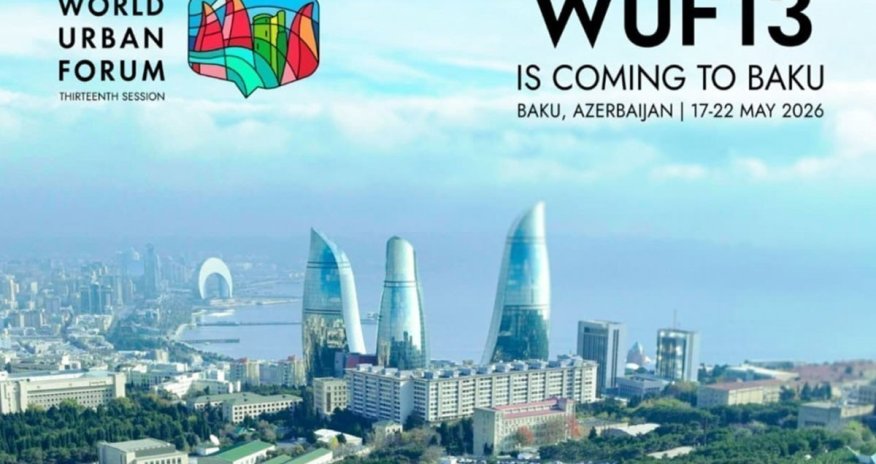


Cities are becoming a central element of national climate strategies under the United Nations Paris Agreement framework, according to a new flagship report presented by UN-Habitat during panel sessions at World Urban Forum 13.
The report examines how urban development and governance are being integrated into countries’ updated Nationally Determined Contributions (NDC 3.0) under the Paris climate agreement.
Speaking at the presentation, Anacláudia Rossbach, deputy secretary-general of the United Nations and executive director of UN-Habitat, said new national climate plans increasingly include housing, urban resilience and living conditions.
“Cities are increasingly recognized as central to climate action. The findings of this report show growing understanding that climate commitments must be implemented where people live — through better housing, stronger infrastructure and more resilient local communities,” Rossbach said.
She added that financing for urban climate measures remains one of the main global challenges.
“Only 19% of countries’ NDCs include dedicated urban financing mechanisms. Global investment commitments need to be strengthened,” she said.
According to Rossbach, 77% of climate plans in Asia already contain well-developed urban components, while Europe has advanced through the European Union’s collective climate plan focused on multilevel governance and implementation mechanisms.
UN-Habitat’s new analysis found that 80% of NDC 3.0 submissions now include comprehensive urban development measures, compared with 49% in the previous cycle.
The report, titled “Urban Content in NDC 3.0: Cities in the Spotlight,” analyzed 142 national climate plans.
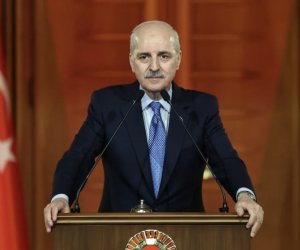
Murat Kurum, Turkey’s minister of environment, urbanization and climate change and president-elect of COP31, said cities are now the key battleground in the fight against climate change.
He said that following the devastating 2023 earthquake, Turkey integrated urban reconstruction, resilience and climate adaptation into a single strategy.
“We built nearly half a million homes based on near-zero energy building concepts, energy efficiency, environmentally friendly construction, zero-waste production and smart management systems. This reduced energy consumption by nearly 40%,” Kurum said.
He added that Turkey plans to share this experience during COP31 and support scaling up sustainable urban solutions globally.
Kurum also noted that more than 50 countries have still not submitted updated NDC 3.0 climate plans ahead of COP31.
“COP31 will play a key role in accelerating urban climate action in line with the Paris Agreement,” he said.
Mohamed Sefiani, mayor of the Moroccan city of Chefchaouen and Africa’s regional climate ambassador, said cities would not be able to achieve climate targets without stronger support and coordination.
“More countries are strengthening the role of local authorities in national climate plans through multilevel governance, capacity building and clearer implementation mechanisms. These tools help transform climate ambitions into safer housing, resilient infrastructure and better public services,” he said.
In an online address, Simon Stiell, executive secretary of the UN Framework Convention on Climate Change, said the new generation of climate plans must become the foundation of a more sustainable and climate-resilient future.
“Now is the time to move from promises on paper to real projects on the ground. Without local action, achieving global climate goals will be impossible,” Stiell said.
N.Tebrizli










Latest news 
More news

 Photo
Photo 


 Video
Video