





Sacred cave where GIANT LIONS were sacrificed 60,000 years ago discovered in Russia
25.08.2015 23:30


A huge collection of animal bones - dating back up to 60,000 years - has been unearthed deep within the Ural Mountains of Russia.
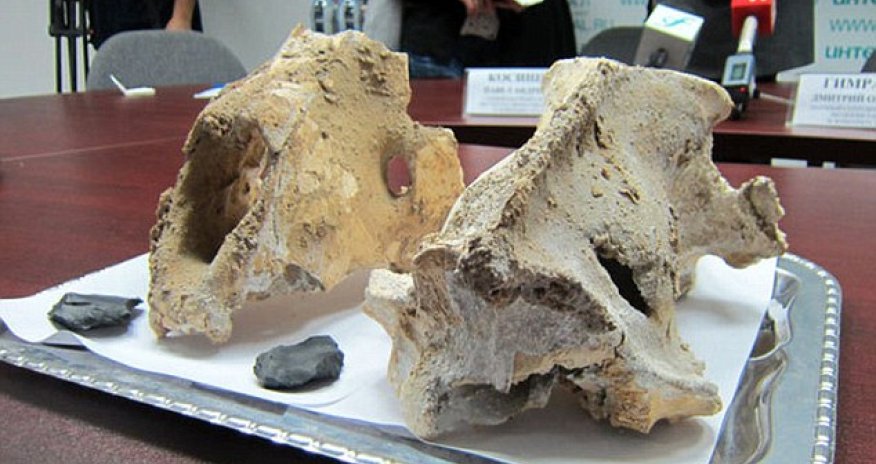
More than 500 bones and fragments were discovered inside the Imanai cave, in the republic of Bashkiria, and experts believe they belonged to giant cave lions.
The find is the largest-ever discovery of remains of the extinct creature and archaeologists claim the animals would have been made as sacrifices by ancient man.
The cave lion lived in and around Europe from 370,000 to 12,000 years ago and was also known as the Eurasian cave lion.
The species is said to have been around 25 per cent larger than modern lions and stood around 3ft (one metre) tall.
The animals lived at the same time as Neanderthals and have been depicted in cave paintings, yet despite their name they didn't live inside caves.
Instead, they would hunt bears and steal their cubs from caves, particularly during the last European Ice Age.
The cave lions, along with their prey such as cave bears and giant deer, were wiped out by the Quaternary extinction event.
Pavel Kosintsev, from the regional Institute of Plant and Animal Ecology in Yekaterinburg, told The Siberian Times: 'We found about 500 bones and fragments of bones of the giant cave lion.
'But there could be more, after we finish with sorting the collection.
'Such a large quantity of giant cave lion bones at one site is really unique, the only one in the world so far discovered.'
The bones of five or six lions were covered in layers of soil more than 300ft (91 metres) inside the cave, he continued.
Yet it was not normal for healthy giant cave lions to venture so far from the entrance.
'Usually lions did not go so deep into the cave, it is not typical for them,' said the scientist.
He suspects the cave had a religious significance for ancient man and that the animals were sacrificed to their gods, although the names of these gods and the practices involved are unknown.
On the same site, Russian researchers also unearthed a cave bear skull pierced with an ancient spear.
Weapons - notably ten Mousterian stone spearheads - were found too, but there were no signs that prehistoric man lived in the cave.
Previously only two had been located in the entire Urals region of Russia.
The Mousterian period was a Stone Age era that lasted from about half a million to tens of thousands of years ago.
'We also found the skull of a cave bear pierced with the spear, yet there were no evidence that ancient people hunted cave bears, at least not in the Urals,' said Mr Kosintsev.
(dailymail.co.uk)
www.ann.az


Similar news
Similar news











 Photo
Photo 



 Video
Video