





Readers absorb less on Kindles than on paper, study finds
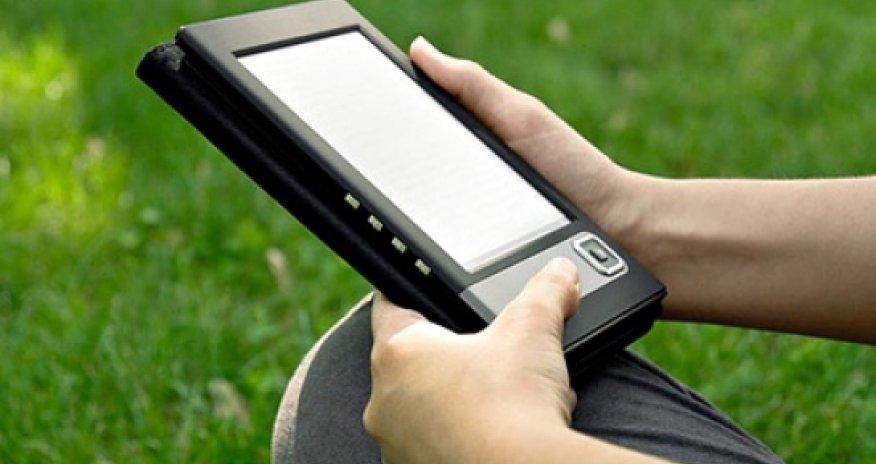


The study, presented in Italy at a conference last month and set to be published as a paper, gave 50 readers the same short story by Elizabeth George to read. Half read the 28-page story on a Kindle, and half in a paperback, with readers then tested on aspects of the story including objects, characters and settings.Anne Mangen of Norway's Stavanger University, a lead researcher on the study, thought academics might "find differences in the immersion facilitated by the device, in emotional responses" to the story. Her predictions were based on an earlier study comparing reading an upsetting short story on paper and on iPad. "In this study, we found that paper readers did report higher on measures having to do with empathy and transportation and immersion, and narrative coherence, than iPad readers," said Mangen.But instead, the performance was largely similar, except when it came to the timing of events in the story. "The Kindle readers performed significantly worse on the plot reconstruction measure, ie, when they were asked to place 14 events in the correct order."The researchers suggest that "the haptic and tactile feedback of a Kindle does not provide the same support for mental reconstruction of a story as a print pocket book does"."When you read on paper you can sense with your fingers a pile of pages on the left growing, and shrinking on the right," said Mangen. "You have the tactile sense of progress, in addition to the visual ... [The differences for Kindle readers] might have something to do with the fact that the fixity of a text on paper, and this very gradual unfolding of paper as you progress through a story, is some kind of sensory offload, supporting the visual sense of progress when you're reading. Perhaps this somehow aids the reader, providing more fixity and solidity to the reader's sense of unfolding and progress of the text, and hence the story."Mangen also pointed to a paper published last year, which gave 72 Norwegian 10th-graders texts to read in print, or in PDF on a computer screen, followed by comprehension tests. She and her fellow researchers found that "students who read texts in print scored significantly better on the reading comprehension test than students who read the texts digitally".She is now chairing a new European research network doing empirical research on the effects of digitisation on text reading. The network says that "research shows that the amount of time spent reading long-form texts is in decline, and due to digitisation, reading is becoming more intermittent and fragmented", with "empirical evidence indicat[ing] that affordances of screen devices might negatively impact cognitive and emotional aspects of reading". They hope their work will improve scientific understanding of the implications of digitisation, thus helping to cope with its impact."We need to provide research and evidence-based knowledge to publishers on what kind of devices (iPad, Kindle, print) should be used for what kind of content; what kinds of texts are likely to be less hampered by being read digitally, and which might require the support of paper," said Mangen. "I'm thinking it might make a difference if a novel is a page-turner or light read, when you don't necessarily have to pay attention to every word, compared to a 500-page, more complex literary novel, something like Ulysses, which is challenging reading that really requires sustained focus. That will be very interesting to explore."The Elizabeth George study included only two experienced Kindle users, and she is keen to replicate it using a greater proportion of Kindle regulars. But she warned against assuming that the "digital natives" of today would perform better."I don't think we should assume it is all to do with habits, and base decisions to replace print textbooks with iPads, for instance, on such assumptions. Studies with students, for instance, have shown that they often prefer to read on paper," she said.(theguardian.com)Bakudaily.Az














 Photo
Photo 



 Video
Video