




Disability and the Japanese art of mastering chopsticks
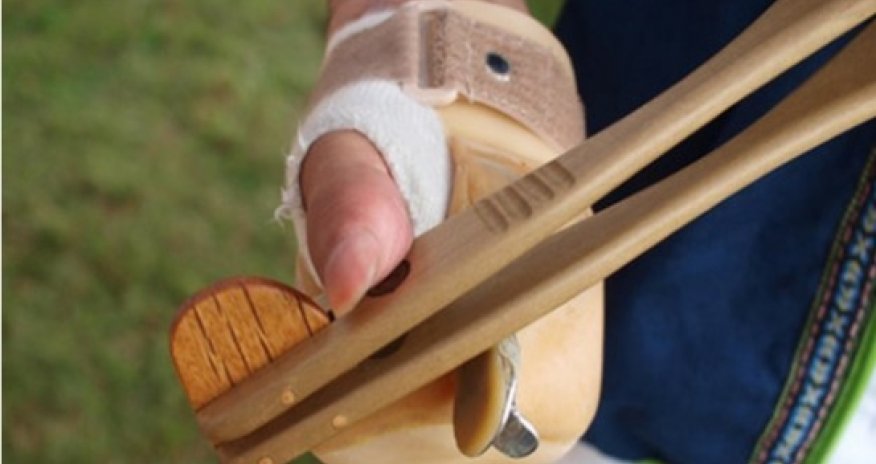


In the UK, using chopsticks badly might be met with laughter from friends and a bashful grab for a spoon. But in Japan, it's a matter of far greater importance - particularly if your disability stops you from using them in the accepted way.Michael Peckitt is a UK national who has been living in Japan for two years. He has cerebral palsy and, a little shaky himself, believes that holding chopsticks in a non-standard way is viewed as a "social deviance"."There is a proper way to do things," he says. "Simply holding chopsticks incorrectly wouldn't get you thrown out of a restaurant of course, but someone, usually a waiter or waitress, will laugh it off to excuse your failure to follow the 'Japanese way'. Of course, people who are physically disabled find it very difficult to follow these etiquettes."Food is a very important element of Japanese culture and the use of chopsticks an integral component of Japanese identity says Chris Perkins, a lecturer in Japanese at the University of Edinburgh. He adds, "it would be very strange to see a Japanese person in a restaurant eating with a spoon or fork" - something a less dexterous disabled person might have to do.Chopsticks are mentioned as early as 1,400 years ago in the Kojiki book - a chronicle of Japanese history thought to have been published in 712 AD. But historians believe they made their way to Japan from China via Korea much earlier than this, and have been a fundamental part of Japanese eating since.Katsuyuki Miyabi, a Japanese craftsman, doesn't think anybody should be excluded from this age-old tradition and is custom-making chopsticks for clients who are disabled.Based in the Fukui prefecture of Japan, Miyabi's solution is spring-operated, and requires little strength and dexterity to use. Although they look like chopsticks, they operate almost like tongs. Squeeze them together to pick up food, and once the pressure is released, they spring back open.Individually designed, Miyabi says each set of chopsticks needs to meet the specific needs of the owner. For example, a person lacking a thumb would need a completely different design to somebody who has paralysis.Miyabi meets clients face-to-face. First they choose the style of chopstick together, then Miyabi carves them according to the precise shape and measurement of the client's hand, and factors in other disability needs such as strength. The end result is a pair of bespoke chopsticks, uniquely suited to the individual client.According to the Japanese cultural blog Spoon & Tamago, the meetings are not just so Miyabi can simply get measurements, but also so he can understand how the disability of clients affects them in daily life.Chopstick etiquette in JapanFood should not be passed from one person's chopsticks to anotherAfter eating, if the chopsticks are not disposable, they should be placed with the tips raised on a restSome may insist that chopsticks are placed to the side of the bowl, on the leftThe thicker end of chopsticks should be used when transferring food to an individual bowl, unless a separate pair of "serving" chopsticks are providedChopsticks should not be placed upright in a bowl of riceFood should not be stabbed with chopsticksChopsticks should not be tapped or banged on the side of a bowl(Source: Fabio Gygi, lecturer in Japanese anthropology, SOAS)The correct use of chopsticks is not just a matter for the Japanese dinner table, as Alan Cummings from London's School of Oriental and African Studies (SOAS) explains. "In Japanese funerals, relatives use chopsticks to pick pieces of their loved ones bones out of the ashes to place them in the urn."Cremations in Japan are different and pieces of bone remain after the tissues and organs have gone. The bones are then passed between relatives with chopsticks."Sometimes relatives hold the same piece of bone with their individual chopsticks," says Cummings. "This is the only time that two people's chopsticks may touch. In all other circumstances this is a reminder of the funeral process and taboo."With rituals like this central to Japanese life, and death, disabled people could benefit from accessible chopsticks rather than resorting to Western cutlery.(BBC)Bakudaily.Az














 Photo
Photo 



 Video
Video