





Trump’s trade war delays ExxonMobil shale project in Azerbaijan
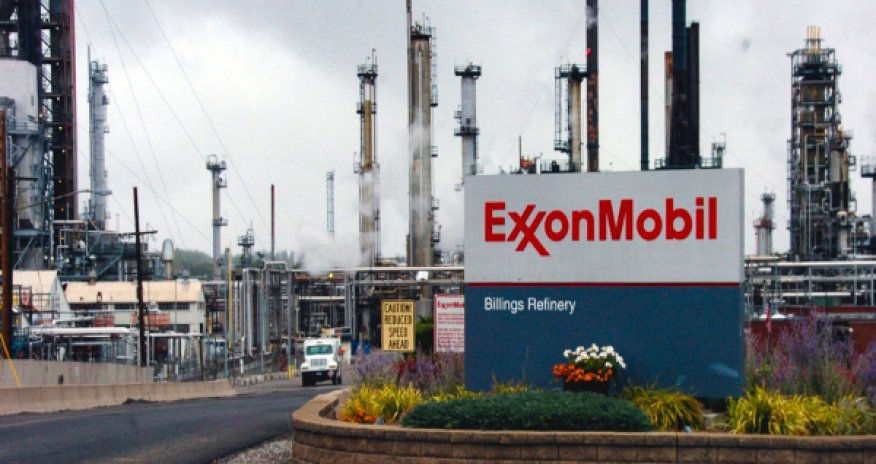


A potential shale oil and gas project in Azerbaijan involving ExxonMobil has been put on hold due to global market instability triggered by U.S. trade policy.
ExxonMobil Vice President for Global Exploration and New Ventures John Ardill visited Baku a month ago to discuss onshore shale development prospects with SOCAR, Azerbaijan’s state oil company. However, the trade war declared by former U.S. President Donald Trump in April has caused a sharp drop in oil prices, casting doubt on the commercial viability of the project.
According to information obtained by haqqin.az, ExxonMobil, despite cutting shale extraction costs to $40–50 per barrel at developed sites over the past decade, still faces projected costs of $60–80 per barrel at new locations. Given volatile oil price forecasts for 2025–26, immediate investment may not be economically justified.
SOCAR confirmed the presence of some shale oil reserves in Azerbaijan, although detailed geological studies have not yet been conducted. Shale gas potential is believed to exist in the Gobustan and Shamakhi regions.
Developing shale reserves requires cutting-edge drilling technologies, especially for horizontal wells, each potentially costing several million dollars. SOCAR emphasized the need for a full cost-benefit analysis before any commitments are made.
While shale extraction is more expensive than conventional oil and gas, it could become a strategic direction in the future as offshore Caspian reserves continue to decline. Mesozoic formations are also of potential interest but remain unexplored.
Experts note that shale oil differs from conventional crude in both composition and extraction methods. It is typically trapped in fine-grained sedimentary rock and must be heated to be released. Shale also contains more impurities, requiring extensive refining.
Environmental concerns are significant. One method, hydraulic fracturing, can pose ecological risks. Open-pit mining (ex situ) leads to land degradation and greenhouse gas emissions, while the more advanced in situ technique, which involves heating shale underground, is cleaner and may be more suitable for Azerbaijan.
Currently, Azerbaijan’s primary oil production comes from the Azeri–Chirag–Gunashli offshore block, where $45 billion has been invested. Since 1997, the field has yielded over 4.5 billion barrels of oil.










Latest news 
More news

 Photo
Photo 



 Video
Video