


Azerbaijan aims to boost meat self-sufficiency through livestock development
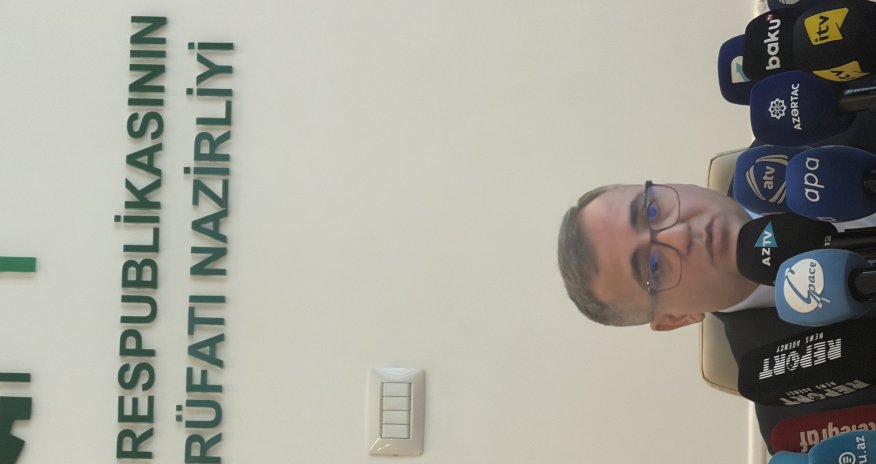


Domestic production currently covers 83.7% of Azerbaijan’s beef demand, 94.2% of mutton demand and 82% of poultry demand, and the government aims to increase these figures under a new state programme for 2026-2030, Deputy Agriculture Minister Zaur Aliyev said.
According to Aliyev, improving self-sufficiency in meat products is one of the programme’s key priorities.
He said meat prices could be stabilised through higher production, improved productivity and lower production costs.
“Our main goal is to increase meat output, improve productivity and reduce production costs. Achieving a sustainable cost structure should help ensure market stability,” Aliyev said.
He noted that global meat prices have risen in recent years due to higher logistics costs, feed prices and other production expenses following the pandemic.
Feed remains the largest cost component in livestock production, and improving feed productivity is expected to help reduce meat production costs in the future, he added.
The state programme includes a range of measures aimed at developing the livestock sector. By 2030, the share of high-productivity cattle breeds in the national herd is expected to increase from the current 2.5% to 10%.
The programme also targets a roughly 10% increase in milk production and a 20% increase in meat production, helping improve the country’s level of self-sufficiency.
To achieve these goals, the government plans to establish new livestock farms, provide them with pedigree breeding stock, build new milk and hide collection centres, improve feed production infrastructure and expand subsidies for breeding animals and livestock products.
In addition, Azerbaijan aims to achieve full self-sufficiency in mutton through the expansion of sheep farming.
Measures include the creation of semi-intensive sheep farms, wool collection centres, restoration of pastures and grazing land, and improvements to water supply systems for farms.
The poultry sector will also be supported through the construction of new modern poultry facilities, the modernisation of existing farms, the establishment of modern slaughterhouses, support for breeding programmes and subsidies for utility connection costs.
As a result, poultry meat production is expected to increase by around 30% by 2030, improving self-sufficiency in the sector.
N.Tebrizli










 Photo
Photo 


 Video
Video