





PlayStation at 20: how Sony’s console has grown up with its players
08.12.2014 18:00


As of this week, PlayStation is 20 years old; it's not a teenager any more. And more importantly, neither are lots of its players.
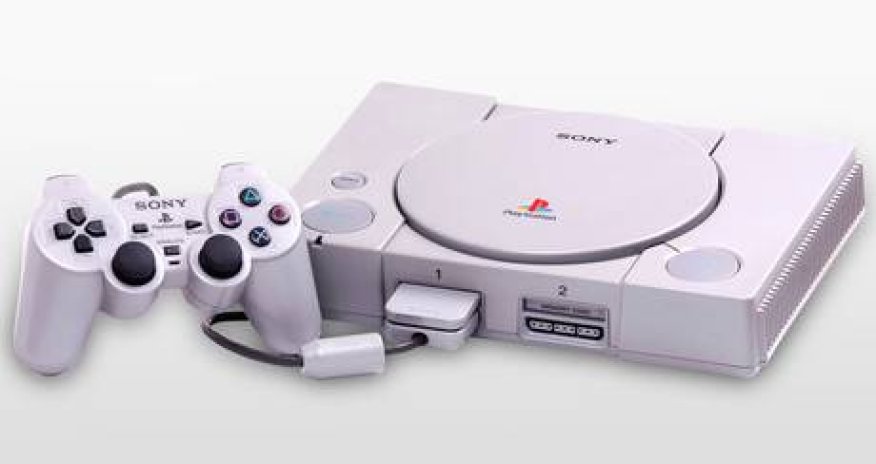
Among the announcements to mark the anniversary, Sony said on Wednesday that it would sell a version of PlayStation 4 in the original console’s grey colour. It was immediately met with a wave of yearning for the original PlayStation – released on December 3, 1994, in Japan, and in North America and Europe around nine months later. It still feels odd that a games console, for a long time a shorthand for teenagehood, should be able to evoke nostalgia. But, quietly, PlayStation has grown up – and taken a whole generation of gamers with it.
The PlayStation, through its four iterations, has been at the front of that process. When the first console was born 20 years ago, its makers expected it to be sold to nerdy youths. By the time of the fourth, about a year ago, it was a fully-fledged entertainment system.
"We were instrumental in taking an entertainment platform that was rather niche and geeky and young at the time, and turning it into a highly credible – dare I say it, cool –form of mass entertainment, comparable with music or motion pictures,” says Jim Ryan, the president and CEO of PlayStation, who has been with the company since before the launch of the first console.
"The way gaming is perceived and the role it plays in people’s lives these days is totally different from what it was 20 years ago.”
The people playing are much the same, even if what they want has changed – gamers have "got older, they’ve more sophisticated in their taste and requirements for gaming experiences”, says Ryan. Partly, that is because gamers have got older, and want more from their games. It's also about the form growing up – players know the form, now, and what games that do more with it.
But as PlayStation has grown up, it has sometimes been accused of leaving people – younger gamers, casual players – behind. Women and other minority groups have also often felt excluded, mostly by high-profile games that reward violence against them.
When the nostalgia-inducing 20th anniversary of the PlayStation 4 was announced, much of the hankering was for a simpler time, hunkered round a console with friends or family, passing round controllers – playing games with plenty of violence, even then, but violence that was mostly ridiculous. Now – at least in the popular idea of games and gamers – that social aspect is online and less meaningful, and the violence is bloody, rather than cartoony.
That’s not lost on Ryan, or developers. Games are taking on some of the sophistication and thoughtfulness of other media, and winning people back as they do so.
"Technology for technology’s sake isn’t all that interesting,” says Ryan. "But I think what it has enabled is the people who create games are now harnessing that technology to deliver huge improvements in, for example, the quality of the storytelling.
"If you go back and you look at some of the iconic games on PS1 all those years ago — the Resident Evils, the Tomb Raiders — the storytelling was actually pretty rudimentary. Contrast that with the sort of storytelling you’re getting in the Uncharted trilogy or even more markedly in The Last Of Us, the storytelling is now comparable to what you see in other forms of entertainment: it’s of a really sophisticated nature.
"And I think as people are just starting to come to terms with the generational leap to PlayStation 4. You’re going to see that go yet further in games that are released in 2015.”
(independent.co.uk)
ANN.Az
Among the announcements to mark the anniversary, Sony said on Wednesday that it would sell a version of PlayStation 4 in the original console’s grey colour. It was immediately met with a wave of yearning for the original PlayStation – released on December 3, 1994, in Japan, and in North America and Europe around nine months later. It still feels odd that a games console, for a long time a shorthand for teenagehood, should be able to evoke nostalgia. But, quietly, PlayStation has grown up – and taken a whole generation of gamers with it.
The PlayStation, through its four iterations, has been at the front of that process. When the first console was born 20 years ago, its makers expected it to be sold to nerdy youths. By the time of the fourth, about a year ago, it was a fully-fledged entertainment system.
"We were instrumental in taking an entertainment platform that was rather niche and geeky and young at the time, and turning it into a highly credible – dare I say it, cool –form of mass entertainment, comparable with music or motion pictures,” says Jim Ryan, the president and CEO of PlayStation, who has been with the company since before the launch of the first console.
"The way gaming is perceived and the role it plays in people’s lives these days is totally different from what it was 20 years ago.”
The people playing are much the same, even if what they want has changed – gamers have "got older, they’ve more sophisticated in their taste and requirements for gaming experiences”, says Ryan. Partly, that is because gamers have got older, and want more from their games. It's also about the form growing up – players know the form, now, and what games that do more with it.
But as PlayStation has grown up, it has sometimes been accused of leaving people – younger gamers, casual players – behind. Women and other minority groups have also often felt excluded, mostly by high-profile games that reward violence against them.
When the nostalgia-inducing 20th anniversary of the PlayStation 4 was announced, much of the hankering was for a simpler time, hunkered round a console with friends or family, passing round controllers – playing games with plenty of violence, even then, but violence that was mostly ridiculous. Now – at least in the popular idea of games and gamers – that social aspect is online and less meaningful, and the violence is bloody, rather than cartoony.
That’s not lost on Ryan, or developers. Games are taking on some of the sophistication and thoughtfulness of other media, and winning people back as they do so.
"Technology for technology’s sake isn’t all that interesting,” says Ryan. "But I think what it has enabled is the people who create games are now harnessing that technology to deliver huge improvements in, for example, the quality of the storytelling.
"If you go back and you look at some of the iconic games on PS1 all those years ago — the Resident Evils, the Tomb Raiders — the storytelling was actually pretty rudimentary. Contrast that with the sort of storytelling you’re getting in the Uncharted trilogy or even more markedly in The Last Of Us, the storytelling is now comparable to what you see in other forms of entertainment: it’s of a really sophisticated nature.
"And I think as people are just starting to come to terms with the generational leap to PlayStation 4. You’re going to see that go yet further in games that are released in 2015.”
(independent.co.uk)
ANN.Az














 Photo
Photo 



 Video
Video