





Big asteroid to fly by Earth Monday
23.01.2015 21:00


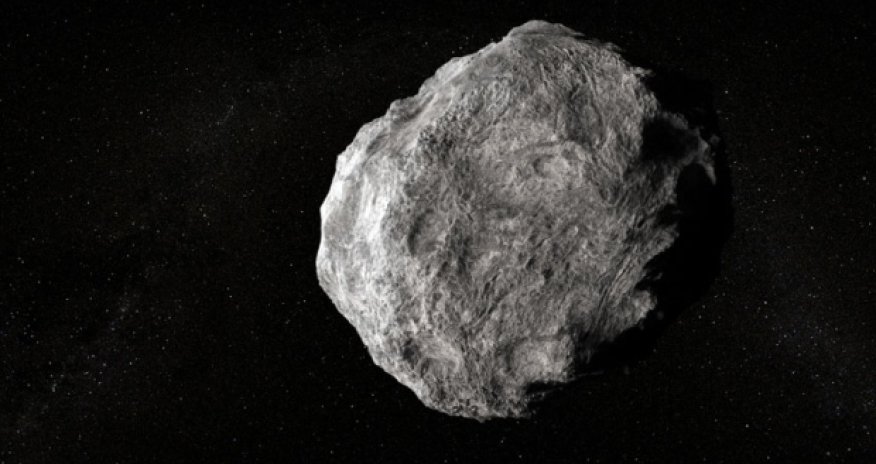
A big asteroid will fly by Earth on Monday, but NASA says don't worry -- we'll be safe.
The asteroid is called 2004 BL86. It'll come about 745,000 miles (1.2 million kilometers) from Earth, or about three times as far away as the moon.
You're wondering, doesn't this happen all the time? Yes and no. There are lots of asteroids that pose a threat to Earth -- about 550 as of today. None are predicted to hit anytime soon.
But asteroid 2004 BL86 (yes, I too wish it had a catchier name) is big -- about a third of a mile (a half-kilometer) in size. It will be the closest known asteroid this large to pass near Earth until 2027, that's when an asteroid called 1999 AN10 flies by us.
"While it poses no threat to Earth for the foreseeable future, it's a relatively close approach by a relatively large asteroid, so it provides us a unique opportunity to observe and learn more," Don Yeomans, manager of NASA's Near Earth Object Program Office at the Jet Propulsion Laboratory in Pasadena, California, said in a NASA press release. (On a side note for space rock fans, Yeomans retired January 9 after 16 years of tracking asteroids. Paul Chodas, has been designated as the new manager.)
This asteroid is also interesting because you might be able to see it with strong binoculars or backyard telescopes. That's a rare opportunity for most of us.
"I may grab my favorite binoculars and give it a shot myself," said Yeomans. "Asteroids are something special. Not only did asteroids provide Earth with the building blocks of life and much of its water, but in the future, they will become valuable resources for mineral ores and other vital natural resources. They will also become the fueling stops for humanity as we continue to explore our solar system. There is something about asteroids that makes me want to look up."
NASA scientists will snap radar-generated images using the Deep Space Network antenna at Goldstone, California, and the Arecibo Observatory in Puerto Rico.
If you don't have binoculars or a scope, you can watch from the comfort of your computer on The Virtual Telescope Project 2.0.
The asteroid was discovered on January 30, 2004, by a telescope of the Lincoln Near-Earth Asteroid Research (LINEAR) survey in White Sands, New Mexico.
Want to know more about asteroids? Check out NASA's asteroid watch program or follow it on Twitter.
(CNN)
ANN.Az


Similar news
Similar news











 Photo
Photo 



 Video
Video