


Abbasgulu Bakikhanov's family house - PHOTO
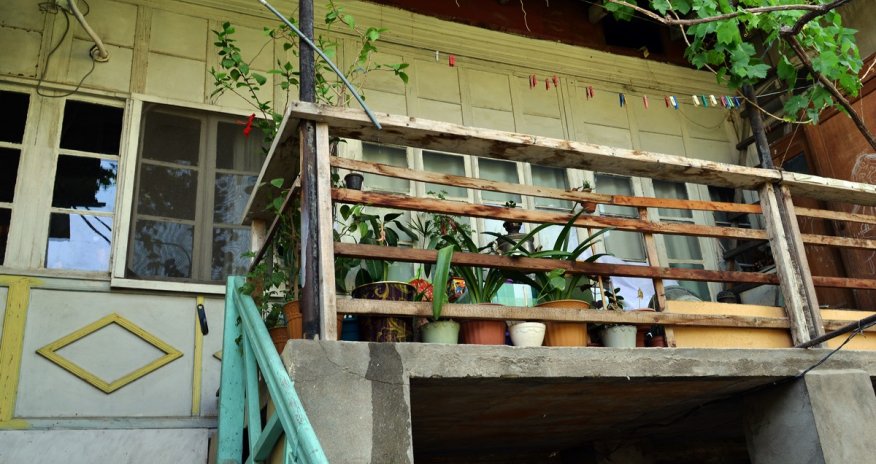


He was an officer in the Imperial Russian Army from 1820 and participated in the Russo-Persian War of 1826-1828. He later retired and settled in Quba, but traveled extensively within Russia, meeting important literary figures as Alexander Pushkin.According to other sources, Bakikhanov was born on 10 June 1794. His childhood contemporized with a defining epoch in the history of the Caucasus—the era of battles between Russia and Persia over political domination in the region. Bakikhanov was the son of the 9th khan of Baku, Mirza Muhammed II and a Georgian lady Sofia.[1] He began his academic studies at the age of 7 and soon excelled in Persian. In 1813, seven years after the loss of the khanate's sovereignty, the family moved to Quba, where Bakikhanov studied social and life sciences, humanities, and languages. Within the next ten years, he learned Arabic, Turkish, and Russian, followed later by French and Polish.[2] In 1818, he established the first Azeri literary society Golestan-i Iram. His poetry at this early phase displayed Bakikhanov's deep moral and philosophical involvement in Islam. In 1820, he enlisted in the Russian army as an interpreter and got a commission for taking part in suppressing the rebellious Kazikumukh Khanate (present-day southern Dagestan).In 1826, Bakikhanov married Sakina, daughter of Kalb Huseyn agha, by whom he had two daughters: Zibayi-Nisa and Tughra.Bakikhanov actively participated in political life of the Caucasus. He was a member of the Russian diplomatic mission that was in charge of negotiating border issues between Russia and Persia in the 1820s. In 1823, he assisted in gathering ethnographic information for the Description of the Province of Karabakh. In 1828, he was among the Russian military command under General Paskevich that took part in peace negotiations with Persia, which resulted in signing the Treaty of Turkmenchay. He managed to convince Khan Ehsan of Nakhchivan, as well as a number of Kurdish leaders of Persia to ally with Russia. The year after Bakikhanov was awarded the 4th Degree Medal of St. Vladimir for participating in the siege of Kars in the Russo-Turkish War of 1828-1829. For a while he served at the Russian Ministry of Foreign Affairs in Saint Petersburg, and had travelled to Kaunas, Riga, and Warsaw before he retired in 1835 and returned to the village of Amsar near Quba.Bakikhanov's religious views were generally liberal due to major European influences. He criticized fanaticism among the religious masses and the Obscurantism of the clergy. He promoted the Islamic culture in the region and in Russia as a whole. His ultimate goal was to establish a Muslim college in Baku and an Oriental languages school in Tblisi. In 1832, he came up with a project for establishing a major educational institution for Muslims, where subjects would be taught in Russian, Persian, and Azeri. He went further, and wrote a number of textbooks through which students were expected to study. The project was sent to the governor of the Caucasus for approval but unfortunately was disregarded and never looked into. Bakikhanov also translated several fables by Ivan Krylov into Azeri — however, only one has been preserved till nowadays. His greatest accomplishment in the field of education was writing Qanun-i Qudsi, the first Persian grammar manual published in history.In 1845, Bakikhanov went on a hajj. On his way to the holy Islamic sights, he was warmly received by the Shah of Persia and was awarded the Shir-e Khorshid, the highest ranking Persian medal. There he also visited Isfahan, Yazd, Shiraz, and Kermanshah. In Constantinople, Bakikhanov had an audience with the Sultan, who showed interest in some of his academic writings, particularly in Asrar al-Malakut, of which he was presented a copy. From there, Bakikhanov went to visit Mecca and Medina. On his way from Medina back to Damascus he caught cholera and died in the small town of Wadi Fatima in Hejaz (present-day Saudi Arabia) in 1847.The pictures of Abbasgulu Bakikhanov's family house.Bakudaily.az







 Photo




 Video


