





Bloomberg underlines Azerbaijan’s experience on floating currency for Egypt

07.11.2016 15:01


Egypt on Thursday became the latest developing nation to announce a free float in the past two years, unleashing a 45 percent slide in the pound to 16 per dollar, according to quotes from six banks including Commercial International Bank Egypt SAE, Bloomberg reports.
The agency highlighted the experience of countries like Azerbaijan, Russia, Kazakhstan and Argentina.
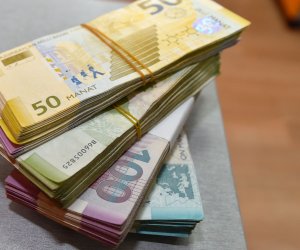
Bloomberg says Azerbaijan moved to a managed free float on Dec. 21 after the central bank used up more than two-thirds of reserves to support the manat. The currency has since fallen 39 percent. The authorities stepped in to prop up the currency in September after it depreciated for three months, forcing banks to either stop or limit their sales of dollars. While the interventions stabilized the currency, the run on the manat reflected Azerbaijan’s failure to restore people’s confidence after the devaluations. Almost 80 percent of savings are now in dollars, according to S&P Global Ratings.
The agency also notes that Russian Central Bank Governor Elvira Nabiullina abandoned currency interventions in November 2014 as the country grappled with sanctions and a slump in the price of oil, its main export . "The ruble, which rebounded this year, is still down about 32 percent since then. Two years on, implied three-month ruble volatility has fallen to levels last seen before the free-float, inflation expectations are coming down, net capital outflows have slowed and Nabiullina has been lauded as Europe’s most-orthodox central banker. What’s more, households have lost interest in currency swings and are keeping 60 percent of their savings in rubles, according to a poll released in August,” it says.
. "The ruble, which rebounded this year, is still down about 32 percent since then. Two years on, implied three-month ruble volatility has fallen to levels last seen before the free-float, inflation expectations are coming down, net capital outflows have slowed and Nabiullina has been lauded as Europe’s most-orthodox central banker. What’s more, households have lost interest in currency swings and are keeping 60 percent of their savings in rubles, according to a poll released in August,” it says.As for Kazakhstan, the agency underlines that policy makers decided on Aug. 20, 2015, to match devaluations by China and Russia, its neighbors and biggest trading partners. ‘The tenge has since tumbled 42 percent. After the move, the country’s central bank was forced to spend at least $1.7 billion, or 6 percent of reserves, to smooth swings in what became the world’s most volatile currency. A year later, the tenge has stabilized and foreign currency reserves are up about 13 percent this year to $31 billion.”
www.ann.az


Similar news
Similar news










 Photo
Photo 


 Video
Video