





Scientists create the world's first glow-in-the-dark pigs using jellyfish DNA
28.12.2013 14:20


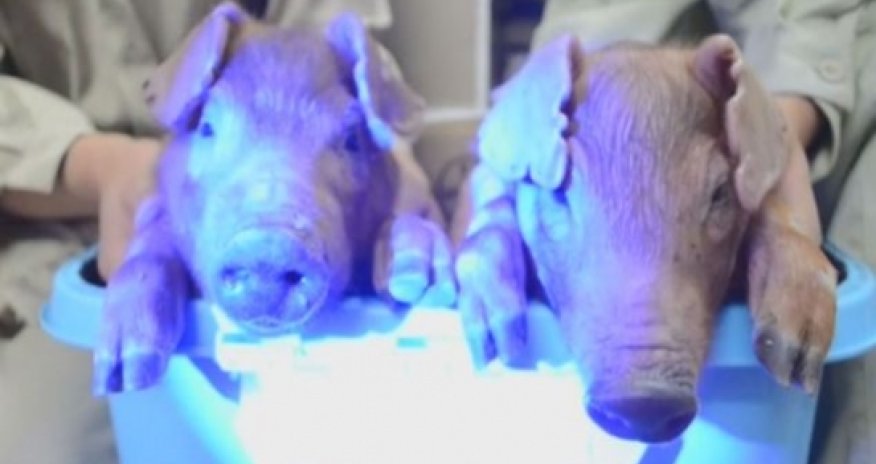
Chinese scientists have created the world's first glow-in-the-dark pigs that emit a fluorescent green light.The piglets acquired their bizarre ability to glow under 'black' or UVA light after their embryos were injected with DNA from a jellyfish.Experts claim that the 10 young animals should live as long as any other pig and that the findings could help develop cheaper drugs for humans.The technique was developed by reproductive scientists at the University of Hawaii at Mānoa's John A. Burns School of Medicine.The same method was used to create the world's first glow-in-the-dark rabbits in Turkey earlier this year, where they are currently working to create a glowing sheep.Dr Zhenfang Wu and Dr Zicong Li of the South China Agricultural University have detailed the research that produced the pigs in a study that will be published the journal Biology of Reproduction. In a video accompanying the research, the pigs grunt when the lights are turned off and after a short while begin to squeal, perhaps hinting that they are a little scared of the dark.The green tint indicates that the fluorescent genetic material injected into the pig embryos has been incorporated into the animal’s natural make-up. 'It’s just a marker to show that we can take a gene that was not originally present in the animal and now exists in it,' explained Dr Stefan Moisyadi, a bioscientist at the University of Hawaii's Institute for Biogenesis Research.Dr Moisyadi said the animals are not affected by the fluorescent protein and will have the same life span as other pigs. 'The green is only a marker to show that it’s working easily,' he said.The ultimate goal of the research is to introduce beneficial genes into larger animals to create less costly and more efficient medicines. '[For] patients who suffer from haemophilia and need the blood-clotting enzymes in their blood, we can make those enzymes a lot cheaper in animals rather than a factory that will cost millions of dollars to build,' Dr Moisyadi explained.The Institute for Biogenesis Research at the John A. Burns School of Medicine focuses on reproductive research. Its aims to continue to improve human in vitro fertilization techniques.(dailymail.co.uk)ANN.Az


Similar news
Similar news












 Photo
Photo 



 Video
Video