





Can Baku-Tbilisi rail become a regional travel hub?
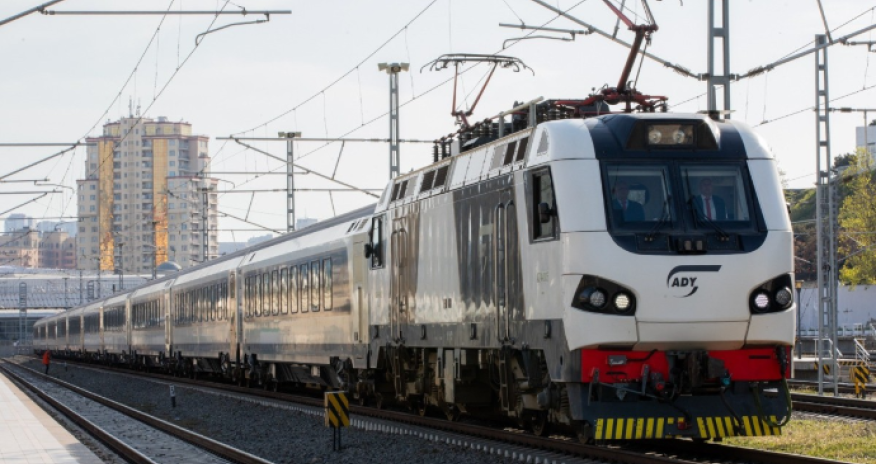


The start of the summer travel season has triggered a surge in demand for the Baku-Tbilisi passenger train. Cheaper than flying, the route has quickly become one of the most sought-after travel options between Azerbaijan and Georgia.
Yet passengers face a familiar problem: tickets sell out almost immediately after going on sale, with many travellers complaining that return tickets from Tbilisi to Baku are particularly difficult to secure.
Azer Farajov, head of the Passenger Transportation Department at Azerbaijan Railways (ADY), says the company expects to carry around 100,000 passengers a year on the Baku-Tbilisi-Baku route.
That target suggests the operator is planning for a relatively conservative occupancy rate despite running daily services. However, the speed at which tickets disappear during the summer season — especially on the return leg — indicates that actual demand could be considerably higher.
This raises a broader question: will the Baku-Tbilisi train remain simply a railway connection between two capitals, or can it evolve into a regional transport corridor stretching from the Caspian Sea to the Black Sea?
A cheaper alternative, but difficult to plan
Ticket prices for the Baku-Tbilisi-Baku service currently range from about 85 to 189 manats, depending on the class of travel, with some sources putting the lowest fare at 81 manats.
Air travel is generally more expensive and prices fluctuate depending on demand and booking dates. Online booking platforms show one-way flights from Baku to Tbilisi starting at around $60-$88, while round-trip fares begin at roughly $226.
In other words, the cheapest train ticket costs around 81-85 manats, while the lowest air fare is typically equivalent to 100-150 manats.
The crucial difference is pricing policy.
Airlines use dynamic pricing, rewarding passengers who book well in advance and charging higher fares as departure dates approach. The railway system, however, offers little opportunity for long-term planning, making it difficult for passengers to benefit from lower prices.
International practice suggests there is another way.
Across Europe, train tickets are typically released three to six months before departure, and on some routes even earlier. Prices are often dynamic: early bookings come with lower fares, while tickets become more expensive as seats fill up.
Germany’s Deutsche Bahn opens sales for some services six to twelve months in advance, while operators in Italy and Spain usually release tickets two to six months before departure.
The approach in the former Soviet region is more conservative but still offers longer planning horizons than the Baku-Tbilisi route.
In Russia, long-distance domestic rail tickets are generally available 90 days before departure, and up to 120 days ahead on popular Moscow-St Petersburg services. International routes are often opened for sale 60 days in advance.
Kazakhstan usually releases tickets 45 days before departure, while Uzbekistan has traditionally used a 45-day booking window, with some routes now moving closer to 60 days.
Against this backdrop, opening ticket sales for the Baku-Tbilisi train only one month before departure appears to lag behind both European standards and practices elsewhere in the region.
Transport and logistics expert Rauf Agamirzayev believes ticket sales should begin at least 90-120 days in advance, and ideally up to one year before travel.
Such a system would allow passengers to plan ahead and secure lower fares while giving the operator a better understanding of demand and a stronger basis for managing capacity.
Batumi could transform the economics of the route
According to Agamirzayev, extending the railway to Batumi could significantly increase its commercial viability.
The presence of international airports in Baku, Ganja, Tbilisi, Kutaisi and Batumi creates an opportunity to integrate rail and air transport, making it easier for international travellers to visit both Azerbaijan and Georgia within a single journey.
A Baku-Tbilisi-Batumi line could become a tourism corridor connecting the Caspian and Black Seas.
Batumi’s proximity to the Turkish border could further strengthen the route’s appeal.
The expert notes that tens of thousands of Azerbaijani students study in Turkey. A combination of rail travel to Batumi followed by a bus connection could provide a convenient and affordable multimodal option for students and tourists alike.
The same model could also attract visitors travelling from Turkey to Azerbaijan and Georgia.
More capacity instead of higher prices
The Stadler sleeper trains currently operating on the route were originally designed for the Baku-Tbilisi-Ankara corridor.
Growing demand, however, highlights the need for additional rolling stock.
Agamirzayev believes that adding lower-cost trains and increasing the number of economy sleeper coaches would make the service accessible to a broader segment of society.
In his view, when demand exceeds supply, the priority should not be raising prices but expanding capacity.
More coaches and additional services would allow more passengers to travel while creating room for lower-priced ticket categories.
The return of night trains
The expert argues that the Baku-Tbilisi project should be viewed not merely as an international railway service but as part of a broader strategy for reviving night trains.
Across Europe, overnight rail services are enjoying a renaissance as rising air fares, environmental concerns and passenger comfort make sleeper trains increasingly attractive.
Agamirzayev believes Azerbaijan should also develop overnight services linking major cities and border regions.
“People should know that a night train can reliably take them from the capital to the regions and back,” he says.
Although sleeper trains are slower than aircraft, they offer a different kind of efficiency: travellers spend the night on the move and arrive at their destination the following morning, saving both time and accommodation costs.
More than a railway connection
Ultimately, the debate is not simply about one international train.
Azerbaijan’s geographical location gives it the potential to create a regional passenger corridor linking the Caspian Sea, the Black Sea and, eventually, Turkey.
If the Baku-Tbilisi line is extended to Batumi, integrated into a multimodal transport network, supported by additional trains and backed by a more flexible ticketing system, it could become much more than a railway connecting two capitals.
It could evolve into a regional tourism and transport corridor stretching from the Caspian to the Black Sea, boosting passenger traffic, improving profitability and making affordable travel accessible to a much larger number of people.
By N.Tebrizli













 Photo
Photo 



 Video
Video