




'If you shoot someone in Gaza, it's cool'
05.05.2015 23:00


A group of Israeli veterans released testimony on Monday collected from more than 60 soldiers of various ranks who fought in Gaza during the war in summer of 2014. In the report:
One soldier states, "If you shoot someone in Gaza, it's cool."
Another describes living in a former home of Palestinians before it was blown up.
And another says two women were called terrorists simply because they had been shot. "So of course they must have been terrorists," he adds. They turned out to be unarmed civilians.
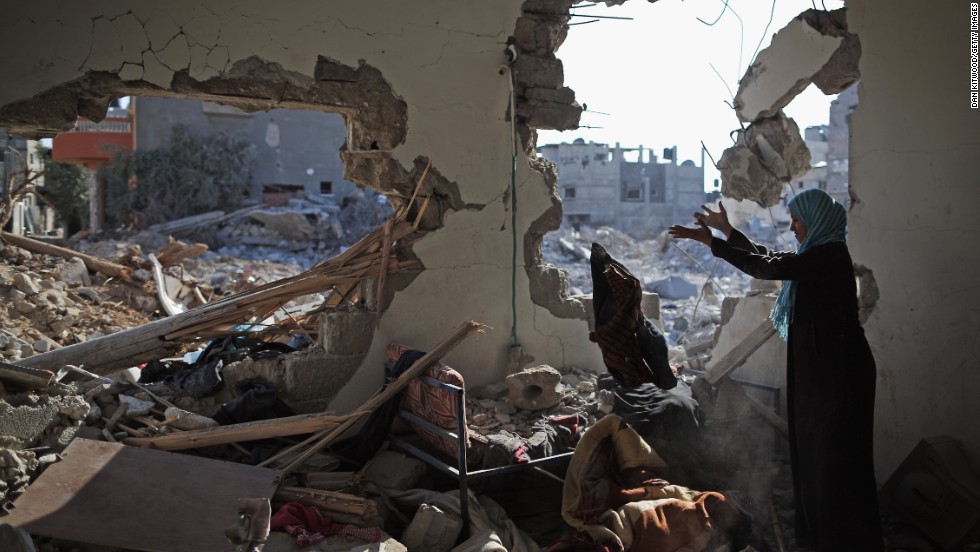
The 240-page report, published by the veterans group Breaking the Silence, outlines various tactics used by soldiers in the Israeli military during the 50-day war that left more than 2,100 Palestinians dead, with more than 1,500 of those being civilians. More than 60 Israeli soldiers were killed along with several Israeli civilians.
In response to the report, the Israeli military released a statement Monday afternoon saying, in part, it is "committed to properly investigating all credible claims raised via media, NGOs and official complaints concerning IDF conduct during operation Protective Edge."
The statement continues saying, "Breaking the Silence refused to provide any proof of these claims."
Avihai Stollar, research director for Breaking the Silence, told CNN in an interview that the interviews were collected to shed light on why large areas of infrastructure had been destroyed and why civilian deaths were so high during the fighting.
"The idea was not to massacre ... but their commanders lied to them and lied to the public that there were no civilians [killed]," Stollar said.
Alongside the report, the group has also released videos of the testimony by soldiers.
"The rules of engagement during operation Protective Edge were pretty vague. There wasn't anything organized." The soldier goes on to add that he and his regiment were told to open fire on anything that looked suspicious, "be it a very tall house, or head peeking from a window, certainly if you see anyone walk out from one house and into another."
During the conflict, the Israel Defense Forces repeatedly stated Hamas used civilians as shields and stashed weapons and artillery in locations such as schools and hospitals.
After the end of the war last summer, an investigation was carried out while soldiers were offered a chance to voice complaints, the IDF said in the same statement Monday.
More than 20,000 homes were destroyed and hundreds of thousands are still displaced, according to the U.N. Relief and Works Agency for Palestine Refugees in the Near East.
Many parts of Gaza have yet to be reconstructed as material has been difficult to get because of the Israeli economic blockade on Gaza since 2007.
(CNN)
www.ann.az


Youtube
Follow us on Youtube








 Photo




 Video


