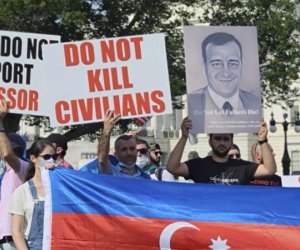
OSCE Minsk Group concerned over tensions on Azerbaijani, Armenian troops’ contact line

12.04.2014 10:46


OSCE Minsk Group's U.S. Co-chair, James Warlick is deeply concerned over continued violence on the contact line of Azerbaijani and Armenian troops, and its potential to damage the peace process."All sides should focus on reducing violence and rhetoric in order to improve the atmosphere for negotiations. Recent deaths and injuries show this is a dangerous conflict with no winners," Warlick told Trend on Friday, April 11.He stressed that OSCE and all of its institutions support the co-chairs' efforts to help the sides to reach a peaceful settlement of this conflict.Warlick added that the events in the region have only underscored the urgency of this task."The sides should seize this moment to take bold steps to advance the peace process - whether it is implementing confidence building measures or people-to-people programs, eliminating the use of force as an option once and for all," he said.Warlick also stressed that the co-chairs stand ready to help in any way they can."Theco-chairs and I are focused on helping the sides reach a fair and lasting settlement based on core principles of the UN Charter, the Helsinki Final Act, and the elements outlined in our presidents' statements over the last five years. Our neutrality is vital to that process," the Minsk Group's U.S. co-chair said.Warlick went on to say that the co-chairs visit Nagorno-Karabakh and the surrounding territories on a regular basis and will continue to do so, although they have no specific dates at this time."These visits provide a unique opportunity to better understand the situation there," he added.James Warlick also touched upon the meeting of presidents of Azerbaijan and Armenia."The presidents agree on the need for further high-level talks, and we are working to help them reach agreement on a time and place, but it's up to them. Their summit in Vienna last November was an important step for the peace process, and we look forward to following up soon on the substantive issues raised at that time," he said.The conflict between the two South Caucasus countries began in 1988 when Armenia made territorial claims against Azerbaijan. As a result of the ensuing war, in 1992 Armenian armed forces occupied 20 percent of Azerbaijan, including the Nagorno-Karabakh region and seven surrounding districts.The two countries signed a ceasefire agreement in 1994. The co-chairs of the OSCE Minsk Group, Russia, France and the U.S. are currently holding peace negotiations.Armenia has not yet implemented the U.N. Security Council's four resolutions on the liberation of the Nagorno-Karabakh and the surrounding regions.ANN.Az


Similar news
Similar news

Political News
12:00
Diplomatic corps accredited in Azerbaijan embarks on visit to Karabakh and East Zangezur

Political News
16:30
Azerbaijani Foreign Minister does not rule out new meeting with Armenian counterpart




 Photo
Photo 

 Video
Video