Time to leave Google Maps and head back to the A-Z?
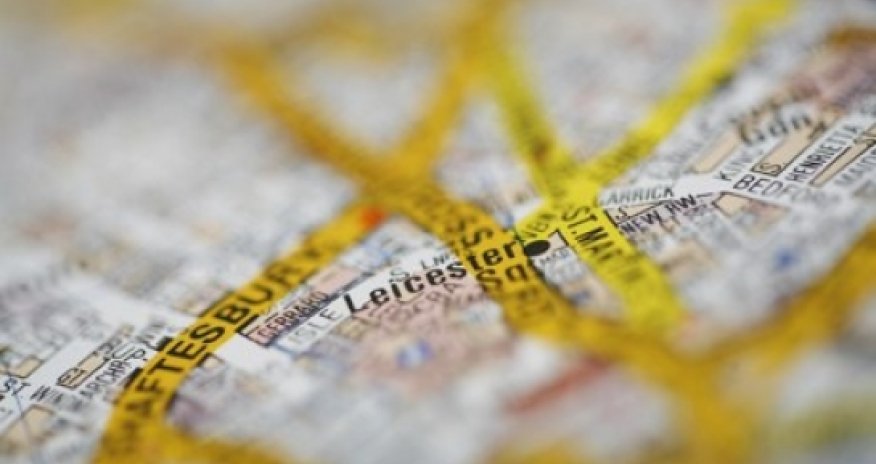


The advent of Google Maps on smartphones, therefore, instantly became for me one of the wonders of the modern world. I depend on it everywhere. If I have no data signal, I revert to a blundering wreck, moving around in random directions and bumping into things like a fleshy dodgem. So the news that GCHQ and NSA can suck up the location data from people using Google Maps on a smartphone puts me in a quandary. If I don't want the government to know where I am at all times, then I won't ever know where I am myself.In an internal document from 2008, British spooks enthused: "[I]t effectively means that anyone using Google Maps on a smartphone is working in support of a GCHQ system." The ascription here of helpful labour ("working in support of") to the smartphone-toting citizenry is an interesting nuance: it pictures the vast majority of people being snooped-on – not as suspicious targets in themselves but as unwitting contributors to a grand social project. We don't (or didn't) know it, but we are helping to build the total surveillance state, the perfect wireless panopticon. Perhaps this is what the Conservatives really meant when they claimed that "we're all in it together". (Even so, I must confess to feeling a glow of patriotic pride on learning that GCHQ's codename for this system was Tracker Smurf. Other countries' spies would never allow themselves such heartwarming frivolity.)More familiar is the argument that in using Google Maps, as well as all kinds of other cloud-based products and social media such as Facebook, we are "working in support" not of official security agencies but of giant corporations. In return for these apparently "free" services, we obediently conduct our own self-surveillance and voluntarily upload the data to the companies who profit from it.Some people argue, indeed, that we should be more worried about providing our data to commercial companies, and less worried about whatever the state snatches on the way. At least, so this argument runs, governments are democratically accountable. (In the thin sense that every four or five years we can vote in a different lot with a slightly varied roster of corporate interests.)And while official agencies will use smartphone data to harass people they suspect of crimes, the tech corporations use it to harass everyone: to show us more adverts and sell our aggregated details to other marketing companies that will spam us incessantly till we die. Companies are eagerly working on improving the precision of location-tracking even inside shops, so your phone can tell which aisle you are walking down and blast a commercial in your face at exactly the right moment. (Apple is already doing this in some of its retail stores.)Compared with this soon to be accomplished dystopia of omnipresent ambient advertising, then, the drawbacks of state location surveillance might seem small to the average individual. Certainly, if GCHQ has studied my collection of "starred" places in London that I have saved to Google Maps, it will know that I seem to be mostly fond of decent pubs, which is to say that I am a perfectly ordinary Englishman. But the point to civil libertarians, of course, is that the reassuring motto "if you have nothing to hide, you have nothing to fear" constitutes blanket authorisation for any degree of totalitarian intrusion.What, then, are the options for the Google Maps user who prefers not to send the equivalent of a text cheerily saying "I'm here!" to the government every time he or she moves from one pub to another? Apple's Maps has apparently improved since its first version directed unsuspecting Australian motorists into the middle of a national-park wilderness, but it would be naive to imagine that GCHQ and NSA don't have access, or won't soon, to this app's data too, as well as other digital options. So maybe these latest revelations will spark a resurgence of actual maps – you know, the ones printed on paper. Perhaps it's time to invest in an A-Z. No, not the smartphone version.(theguardian.com)ANN.Az












Latest news 
More news

 Photo
Photo 



 Video
Video