




Ebola global response was 'too slow', say health experts
29.05.2020 00:08


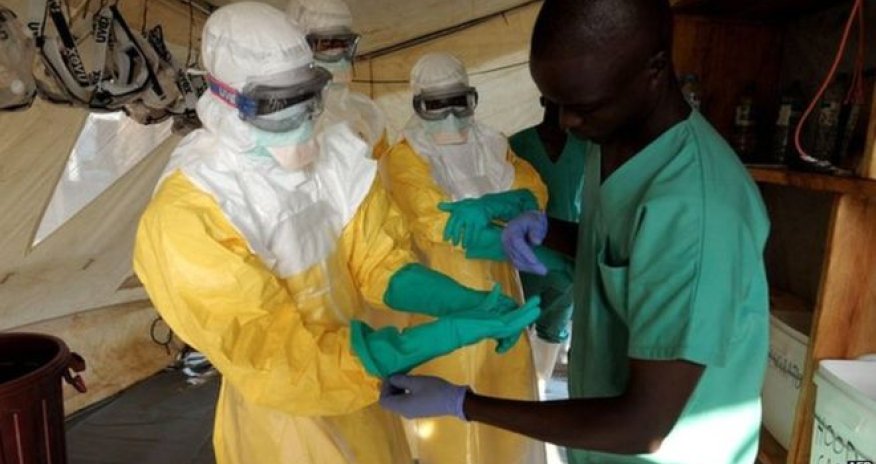
A slow international response and a failure of leadership were to blame for the "needless suffering and death" caused by the recent Ebola epidemic, an independent panel of global health experts has concluded.
The panel's report, published in The Lancet, said major reforms were needed to prevent future disasters.
More than 11,000 people died in the outbreak, which began in 2013.
The World Health Organization has set out plans for reform.
Ebola cases
Guinea, Liberia and Sierra Leone were the countries most badly affected by Ebola.
The independent group of experts, convened by The Harvard Global Health Institute and the London School of Hygiene & Tropical Medicine, said these countries were unable to detect, report and respond rapidly to outbreaks - something which allowed Ebola to develop into "a worldwide crisis".
But the report reserved most criticism for the World Health Organization, saying it was too slow to declare Ebola an international public health emergency - five months after Guinea and Liberia had notified it of outbreaks.
It said the WHO had also failed to meet its responsibilities for responding to the outbreak because of a lack of leadership and accountability.
WHO's director-general Margaret Chan has already said publicly that, with the benefit of hindsight, WHO could have mounted a more robust response. And she has promised some fundamental changes to the Organization, such as creating a single new programme for health emergencies.
When a global response did eventually materialise, towards the end of 2014, it was deemed to be slow, inflexible to conditions on the ground, inadequately informed and poorly co-ordinated.
"The reputation and credibility of the WHO has suffered a particularly fierce blow," the report said.
The panel also criticised some political leaders for playing down the outbreak and not calling for international help.
Early reporting
The report makes 10 recommendations for improving systems to cope with future outbreaks.
These include calls for a global strategy to help poorer countries monitor and respond to infectious diseases.
Those countries that delay reporting outbreaks and sharing information should be named and shamed, it says.
The report also recommends creating a dedicated centre for outbreak response at the WHO, which has a protected budget.
And a global fund should be set up to finance research and development of drugs and vaccines to treat infectious diseases.
The panel, made up of 20 experts in global health from around the world, was chaired by Prof Peter Piot, director of the London School of Hygiene and Tropical Medicine and co-discoverer of the Ebola virus.
(BBC)
www.ann.az


Similar news
Similar news






Latest news 
More news

 Photo
Photo 


 Video
Video